
Downspouts
Downspouts Designed for Better Roof Drainage
The gutter collects the water. The downspout decides where it ends up. We plan both so runoff leaves your home on a deliberate path.
Gutters and downspouts
Where roof water finally lands matters most
A gutter downspout carries water from the gutter to the ground. It sounds simple, but downspouts are where many drainage problems begin or end. Too few outlets and the gutter overflows. An outlet in the wrong spot and water empties onto an entry, a walkway or the base of a wall. A downspout that stops at the foundation simply moves the problem a few feet down.
Port Charlotte Gutters provides downspout installation, downspout repair and downspout replacement for homes and commercial properties in Port Charlotte, FL and surrounding areas, as part of new gutters and downspouts or as a standalone improvement to an existing system.
How discharge works
How roof runoff is discharged and why placement matters
Every downspout drains a share of the roof. How much it handles depends on the roof area feeding that section of gutter and how intensely rain is falling. When a single outlet is asked to carry water from a large roof plane, the gutter backs up and spills over the front edge long before the downspout itself is full.
Number and spacing
Long gutter runs and sections below valleys often need additional outlets. Adding a downspout is one of the most effective ways to stop chronic overflow.
Location on the house
Outlets are best placed where water can be released safely: at corners, away from doors, lanais and walkways, and where the ground slopes away from the structure.
Where the water goes next
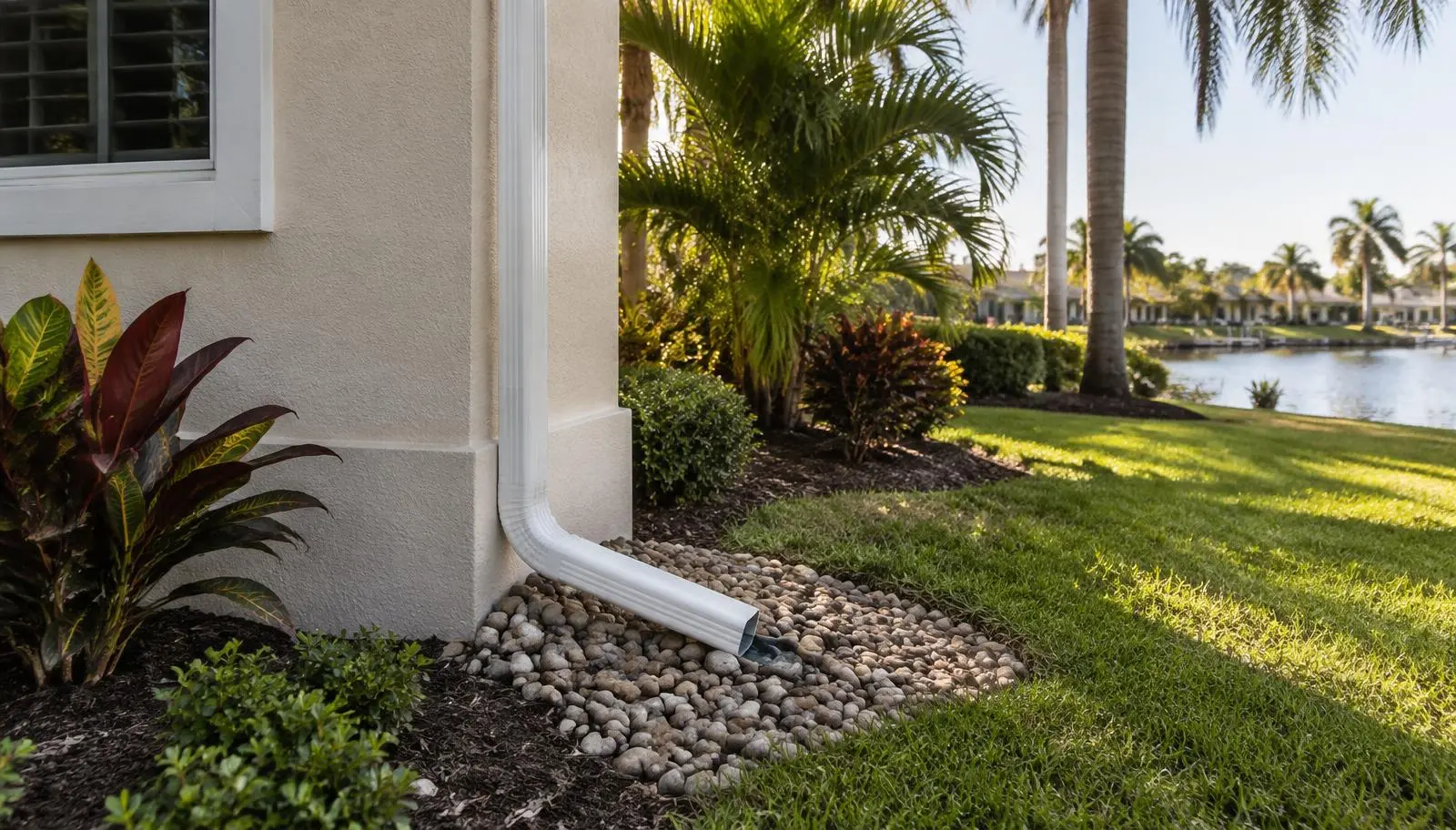
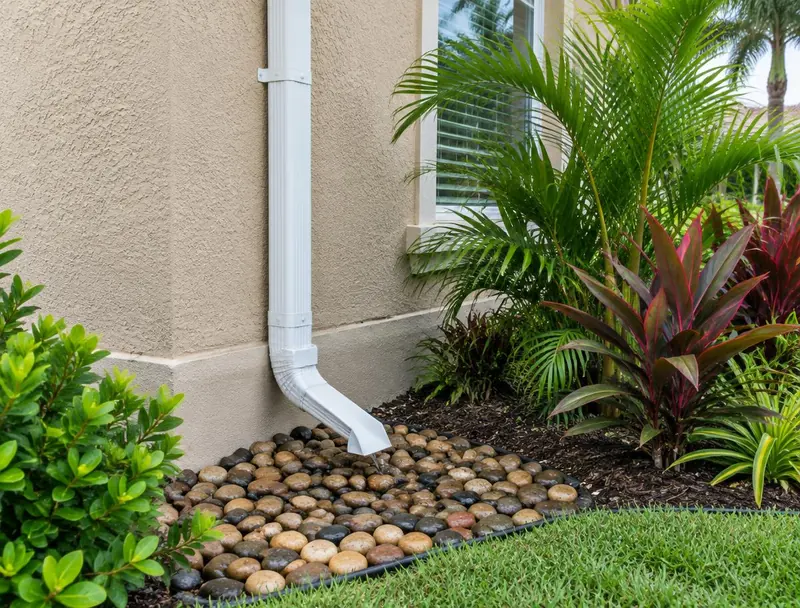
Extensions, elbows and splash areas carry water away from the base of the wall. The goal is to release runoff where the ground can absorb or drain it, not against the slab.
Secure attachment
Downspouts should be fastened to the wall at regular intervals and connected tightly to the gutter outlet, so they stay in place in wind and do not leak at the joints.
Warning signs
Signs your downspouts need attention
- Overflow near the outlet
- Water spilling over the gutter right above a downspout often means the outlet or the pipe is blocked.
- Water pooling at the base
- Puddles where the downspout ends suggest it needs an extension or a better discharge point.
- Erosion and washouts
- Channels in mulch, exposed roots or displaced pavers show where concentrated runoff lands.
- Loose or detached pipes
- Downspouts that have pulled away from the wall or separated from the gutter no longer direct water.
- Crushed or dented sections
- Damage from mowers, ladders or impacts restricts flow and can cause leaks.
- Leaking joints
- Water escaping at elbows or seams runs down the wall instead of reaching the ground where intended.
Local drainage
Heavy rain, flat lots and sandy soil
Many Port Charlotte properties sit on relatively flat lots with sandy soil and nearby canals or drainage swales. Summer storms can deliver a lot of water in a short time, and every bit of it collected by the gutters exits through the downspouts.
That makes discharge location especially important here. Water released against a slab or into a low spot near the house can linger, while water directed toward a lawn, a swale or a splash bed sloping away from the home has a much better chance of draining. Downspout placement will not change how much it rains, but it controls where roof water goes once it falls.
- Flat lots
- Water does not always run away on its own and needs to be directed.
- Sandy soil
- Concentrated flow can wash out beds and undermine edging.
- Intense storms
- Outlets need enough capacity for short, heavy bursts of rain.
- Lanais and entries
- Common outdoor living areas should be kept clear of discharge.
Before you decide
What to think about for your downspouts
Are there enough outlets?
Overflow along a long run often means another downspout is needed.
Where does water go today?
Watch during a storm to see where each downspout releases water.
Landscaping and hardscape
Beds, pavers and walkways affect where discharge can safely go.
Appearance
Downspouts are visible; color and placement affect how the house looks.
Our approach
How we approach downspout work
We look at the roof areas each downspout drains, how water currently leaves the property and where it is causing problems. Your free estimate explains whether downspouts should be repaired, replaced, added or relocated, and how each one will discharge.
Curious about the people behind the work? You can read more about Port Charlotte Gutters and how we approach every project.
Free estimates
Request a free downspouts estimate
Share a few details about the property. A gutter professional will follow up to talk through the work and arrange your estimate.
Questions
Downspouts questions
How many downspouts does a house need?
It depends on the size and shape of the roof and the length of each gutter run. Long runs, large roof planes and sections below valleys often need more than one outlet. We look at the roof to recommend the right number.
Where should downspouts drain?
Ideally onto ground that slopes away from the house, such as a lawn, swale or splash area, and away from entries, walkways and the foundation. Extensions can help carry water farther from the wall.
Can you add a downspout to existing gutters?
Usually, yes. Adding an outlet to an existing gutter is a common way to reduce overflow, provided the gutter is in good condition.
Why does my downspout overflow at the top?
That usually means there is a blockage at the outlet or inside the downspout, often from leaves or palm debris. It can also mean the downspout is draining more roof area than it can handle.
Need better roof drainage?
Request a free estimate and we will recommend downspout placement that moves water away from your home.